
A Few Snips at a Time
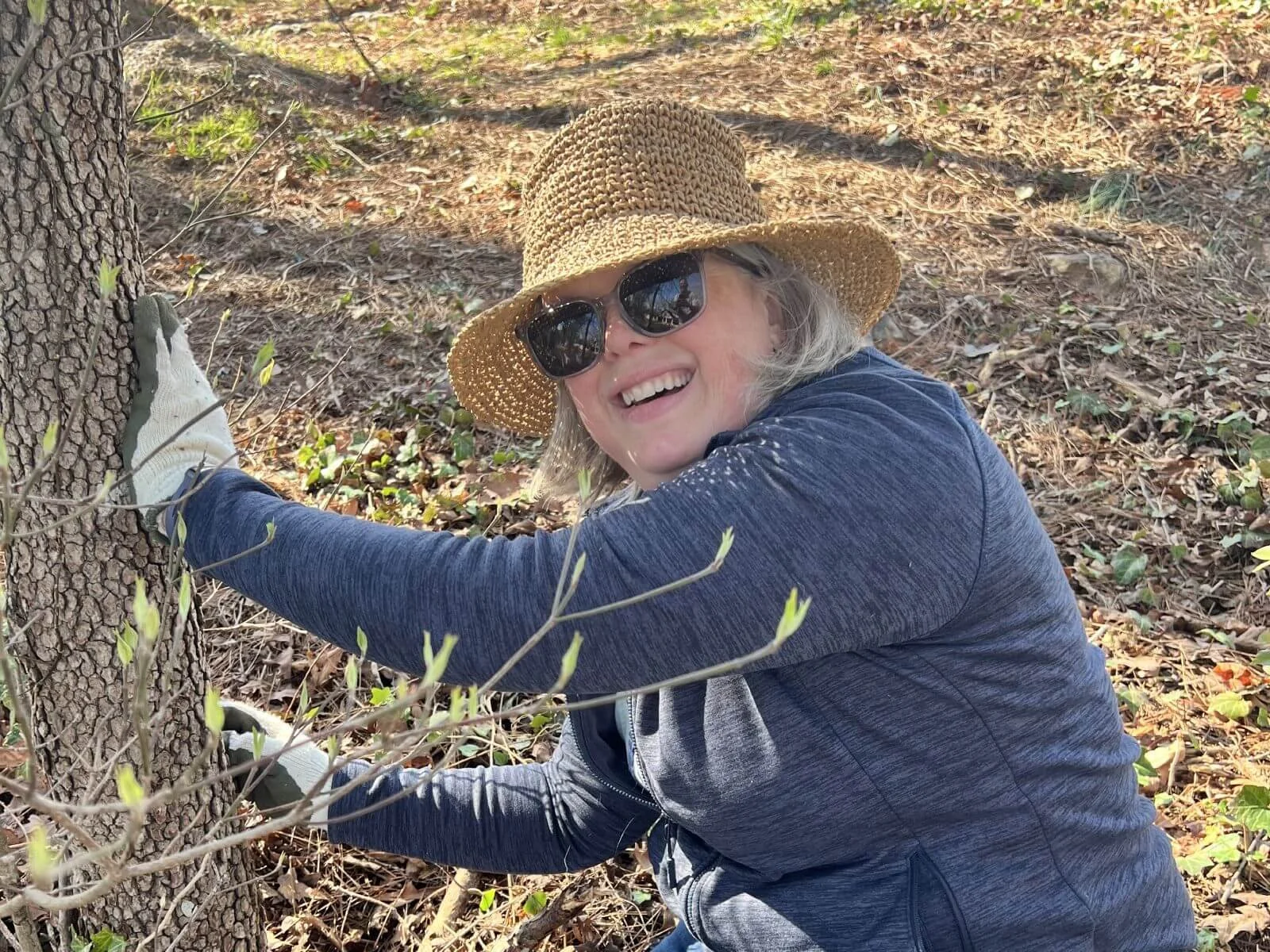
Some of the most important work at Muni this year was done by hand, on a cold Saturday morning, with a pair of pruners.
In January, neighbors and Friends of Asheville Muni gathered at the corner of Fairway and Canterbury, on the 12th hole, for a Save Our Oaks work party. The job was plain and the tools were basic: cut back the English ivy that has climbed and killed so many of the course's trees. FOAM brought the donuts. Through the winter and into spring, volunteer crews kept at it, freeing oak after oak. In April the work moved to the pollinator garden, where a handful of neighbors spent two mornings raking, mulching, and getting the beds ready for the growing season.
Those oaks are doing far more than shading the fairways. Native oaks are a keystone species, home to hundreds of kinds of caterpillars, which are the single most important food for baby songbirds. A pair of Carolina Chickadees needs somewhere between 6,000 and 9,000 caterpillars to raise one nest of chicks, and most of them come from oaks. Left alone, ivy climbs a trunk, shades out the leaves, and in time takes the whole tree down. A few snips each year keeps it in check.
This is what FOAM means when it says the Muni is more than a golf course. It is a public place where the game and the natural world share the same ground, and both are better for a little care.
6,000 to 9,000. The caterpillars it takes to raise a single nest of chickadees, most of them from oak trees.
There will be more work days, and every one of them is open to anyone willing to lend a hand.
Join the Friends and we will see you at the next one.